
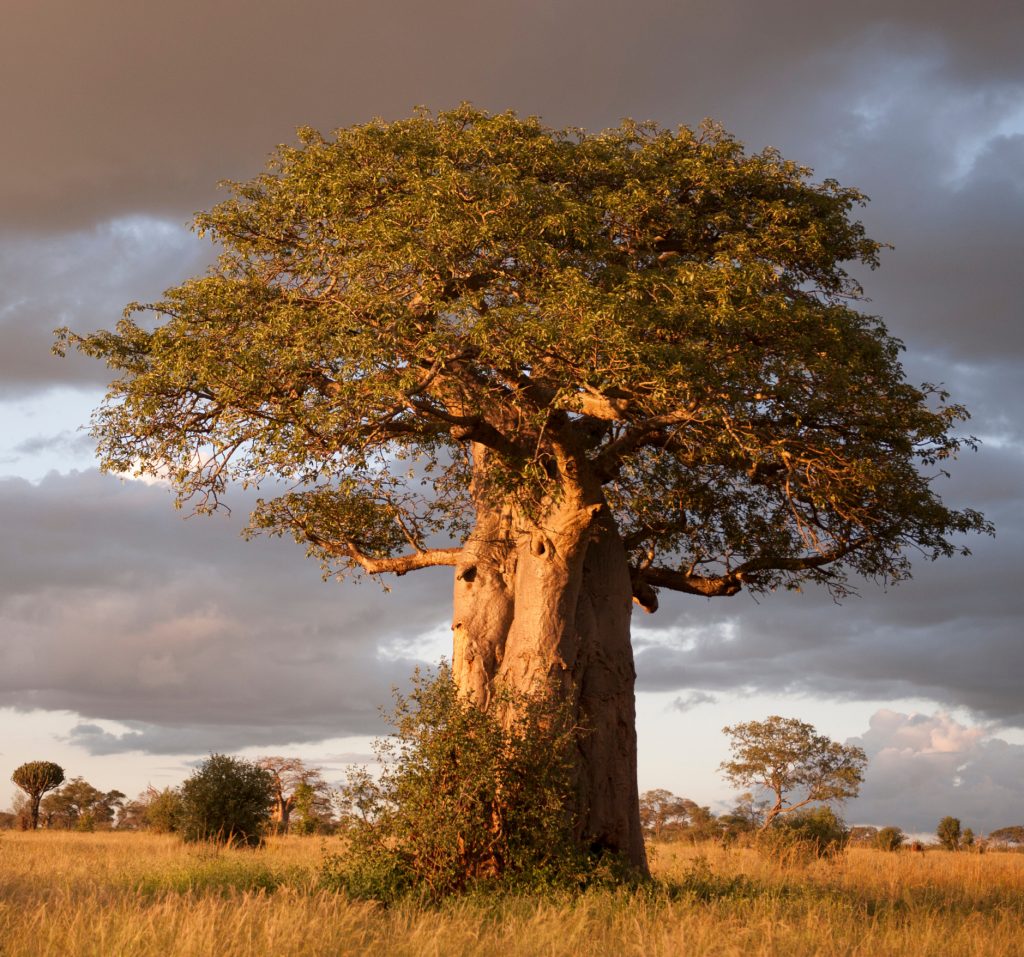
African baobab tree
African baobab trees, scientifically known as Adansonia Digitata, are among the oldest living organisms in the world. Baobab trees originated in West Africa millions of years ago and spread to other parts of the world over time, leading to the development of new species. There are 9 baobab species, 6 of which originate from Madagascar, 2 from Australia, and 1 from Africa. The fruit of the baobab tree used for our Bao-Med products comes from South Africa, which has been proven to be the most nutrient-rich variant. The baobab fruit is known as one of the world's best superfoods and contains more vitamins, minerals, and dietary fibers than almost any other food/fruit on the planet.
The oldest baobab trees have been carbon-dated to be at least 1,275 years old. These trees can reach heights of up to 30 meters and a diameter of up to 10 meters. The baobab is a fibrous tree that consists of approximately 75% water. This water is stored in the cells of their trunk, giving the trees their characteristic swollen shape. This helps them survive in the driest regions of Africa.
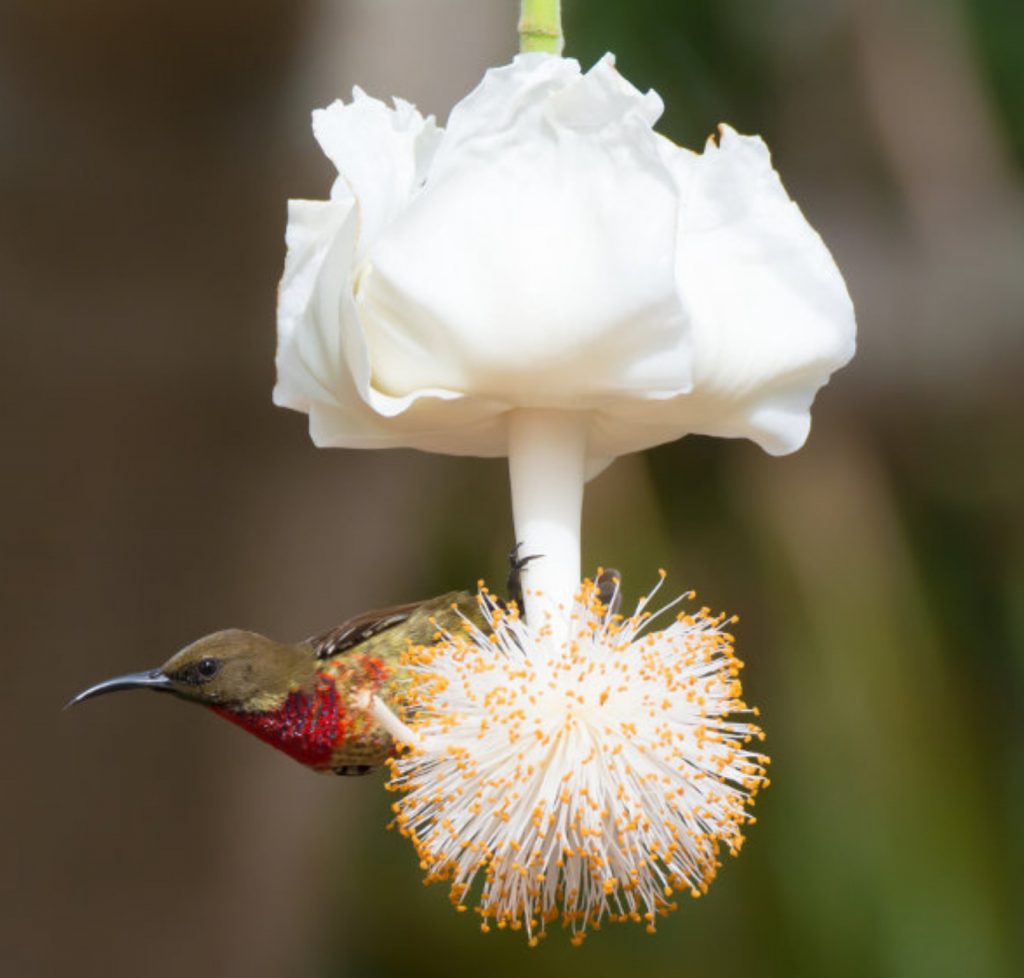
Baobab flower
The baobab tree bears leaves during the summer months. These leaves are a valuable food source for many communities living close to these trees. They are cooked and consumed in the same way as spinach.
Baobabs grow a small flower bud that looks very much like a small baobab fruit. The flower bud only opens for one day. A large white flower opens slowly as the sun sets to be pollinated at night. In most parts of the world, bats pollinate baobab flowers, but studies in South Africa have shown that hawk moths are the primary pollinators of baobab tree flowers, not bats at all.
The flower will then wilt and the fruit will start to grow from the stem. In South Africa, this occurs in November, and the fruits fall from the trees about 6 months later when they are ripe and dry.
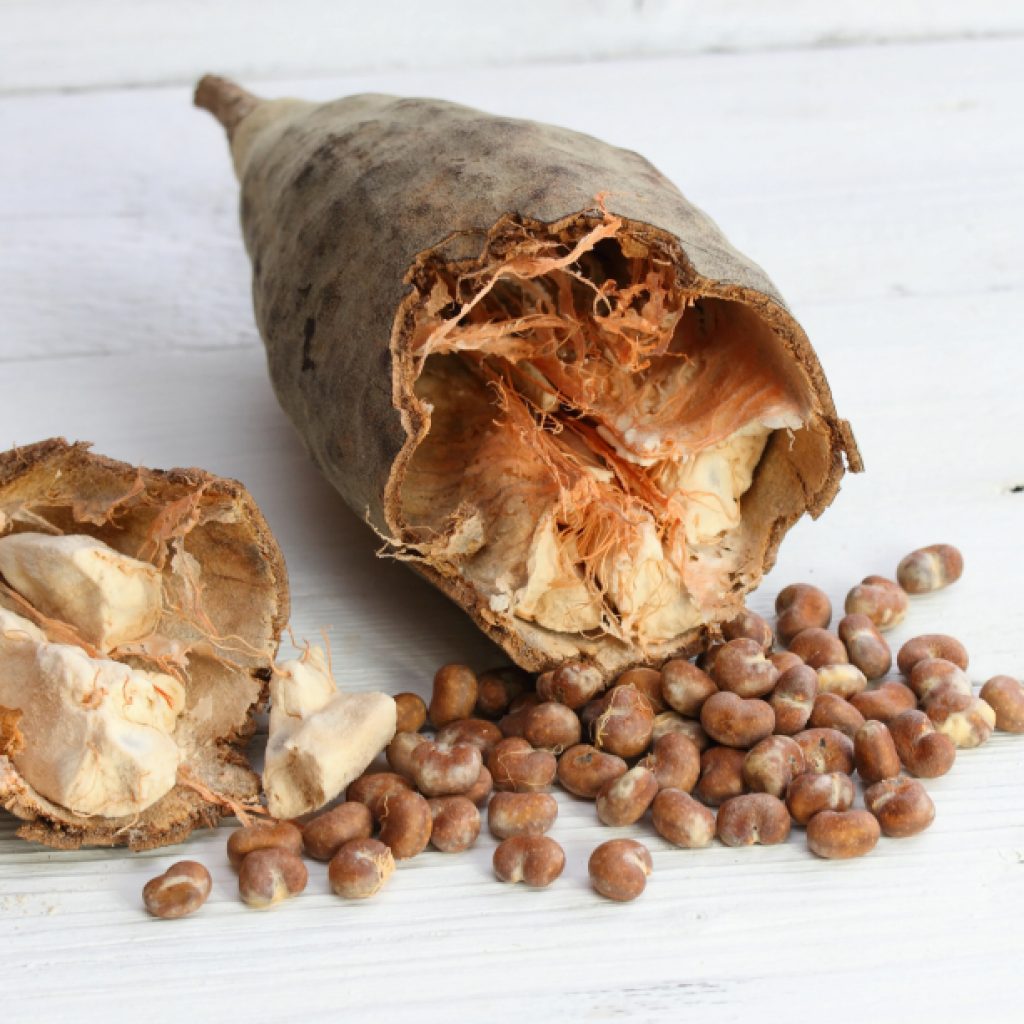
Baobab fruits & seeds
These fruits are gathered from the ground by the local population and are not harvested from the trees. The fruit is therefore not a product of agriculture and is called wild fruit, which is naturally sustainable. The baobab fruit is known as one of the world's superfoods. The baobab fruit contains more vitamins, minerals, dietary fibers, etc., than almost any other food/fruit on the planet.
The baobab fruit has a hard exterior and is covered with short, velvety hair. The shape can vary from elongated to round. Large fruits can weigh more than 2 kg and contain more than 400 seeds, while smaller ones can be as large as an apple with only a few seeds. Inside the fruit is a dry, white fruit powder in which the seeds are held in a loose network of red fibers.
The seeds are dark brown and kidney-shaped. They are about a centimeter long and have a soft interior. Oil can be extracted from the seeds and used on the skin and hair.